Conjunctions
About the text
Yeats first published this poem in 1934. It is out of copyright in Ireland and the EU, but in the United States it stays in copyright until the start of 2030, and this site is served partly from American servers. So for now we give the notes without the full text; it will appear here in 2030.
It begins: If Jupiter and Saturn meet
In brief
SummaryTwo meetings of planets stand for two opposing ages of history.
A riddle in four lines, built on astrology. When the planets Jupiter and Saturn meet, the first couplet says, a strange harvest follows: ancient grain that sprouts after lying dormant in a tomb. The second couplet gives the other great conjunction, of Mars and Venus: the sword of the war god is also a cross, on which Christ died, and the goddess of love sighs on the breast of Mars. Yeats explained in a letter that the Mars and Venus conjunction stands for the Christian age, and the Jupiter and Saturn one for the opposite kind of age, when old traditions come back to life.
Lines to remember
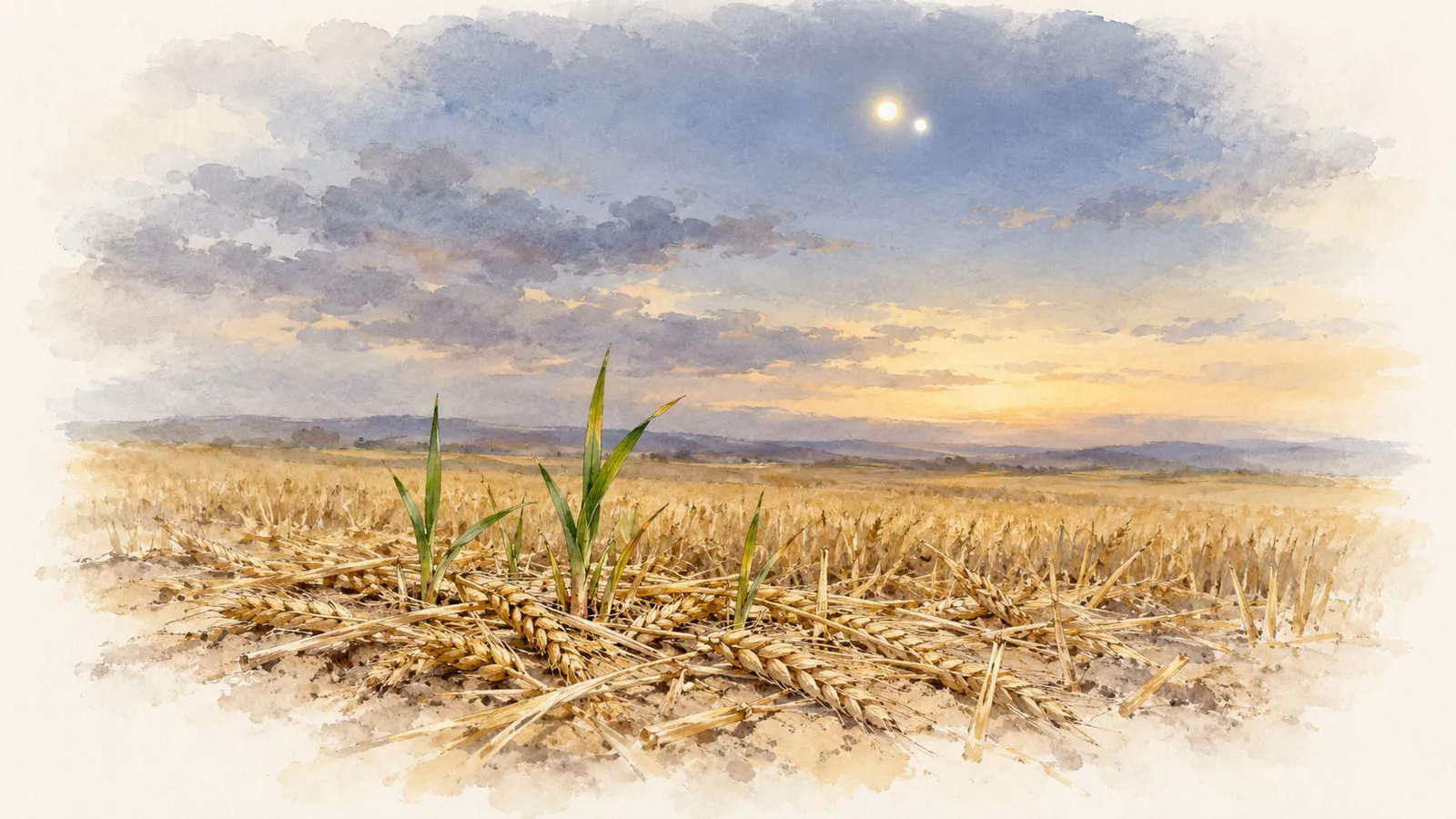
What a crop of mummy wheat!
Line by line
Lines 1 to 4Two conjunctions
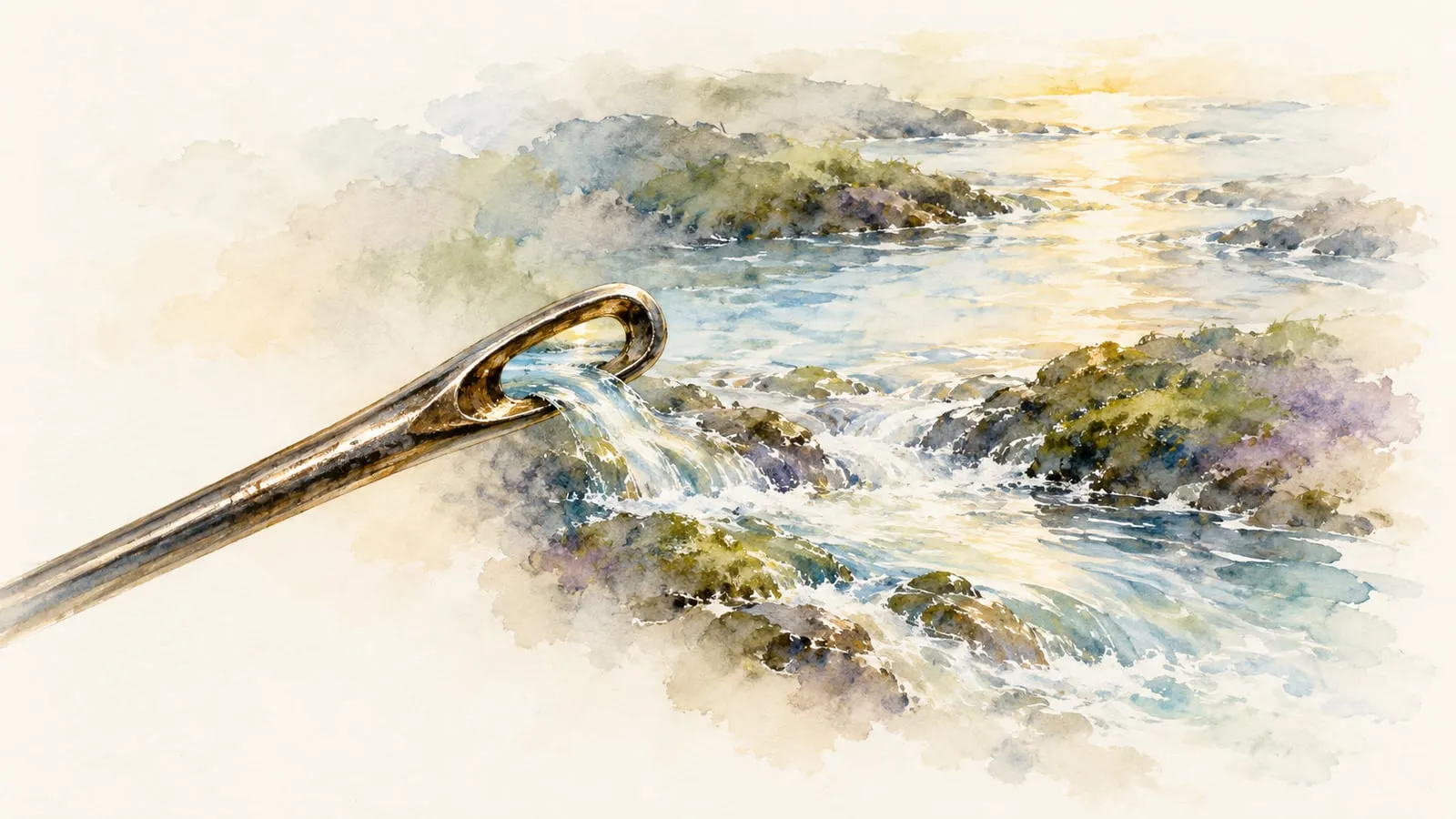
A conjunction is the apparent meeting of two planets in the sky, long read by astrologers as a sign of great change. Jupiter and Saturn meeting yield a crop of ancient, reawakened wheat. The final pair of lines turns to Mars and Venus: the sword of the war god is also the cross of Christ, and the goddess of love sighs on his breast, so war, love and sacrifice meet in one emblem of the Christian age.
Themes
Opposing ages
The poem sets two eras against each other. Yeats told Olivia Shakespear in 1934 that the Christian age is the Mars and Venus one and is "democratic", while a Jupiter and Saturn civilisation is born among the most cultivated, "out of tradition, out of rule". In Yeats's thinking history swings between such opposites, and each planetary meeting announces a turn of the wheel.
Rebirth
"Mummy wheat" was grain said to have been found in Egyptian tombs and to have grown when planted thousands of years later. It suits a poem about ages returning: what seems dead and buried can come back to life when the heavens are right.
Context
The poem is one of the Supernatural Songs, first collected in The King of the Great Clock Tower (Cuala Press, 1934) and then in A Full Moon in March (Macmillan, 1935). The sequence gathers Yeats's late thoughts on religion, sex and the cycles of history.
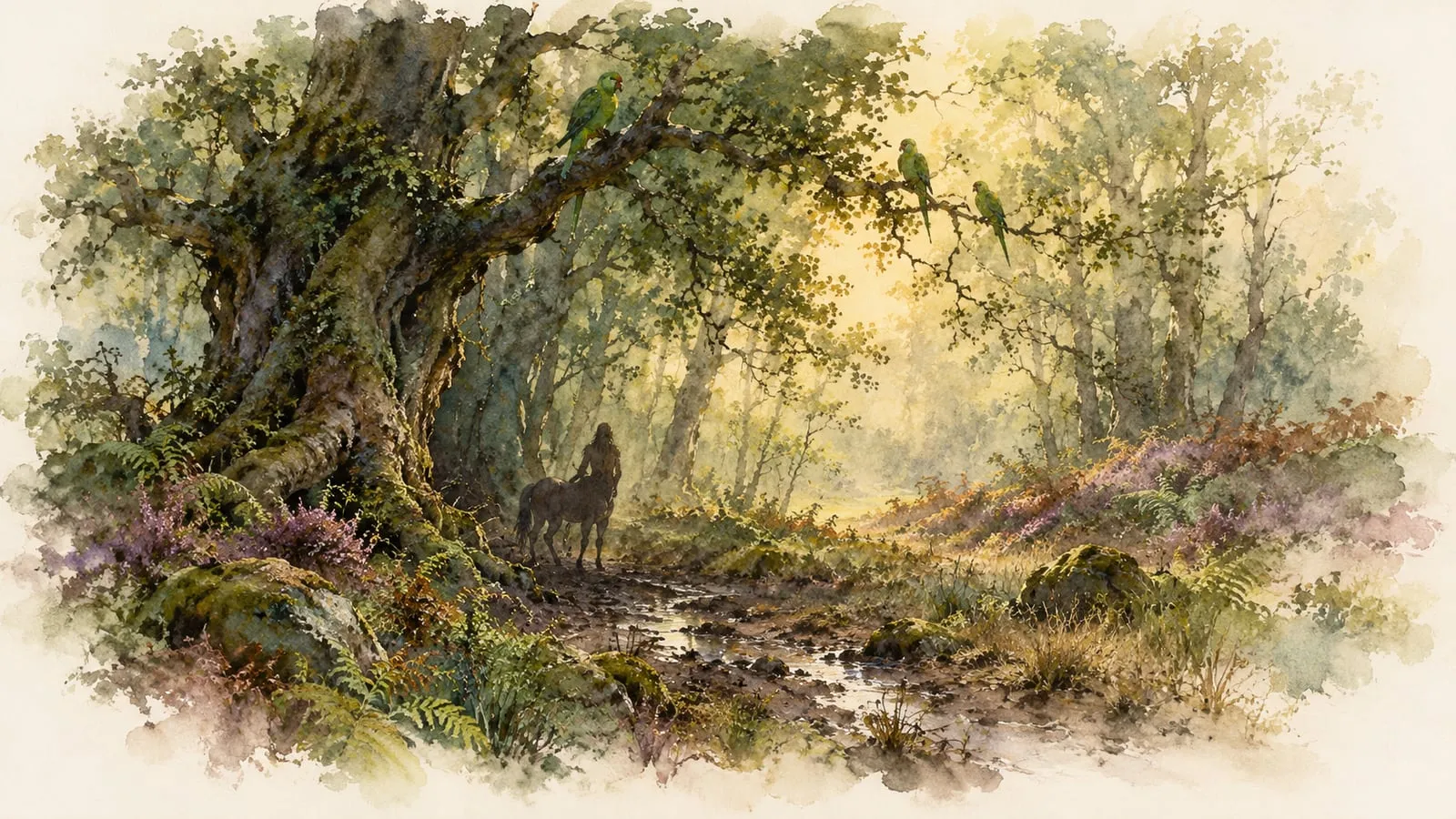
In the same period Yeats noted that his two children had been foretold as a Mars and Venus and a Saturn and Jupiter nativity, Anne being the Mars and Venus personality, so the poem's astrology was private as well as historical. Yeats had used the image of mummy wheat before, in "On a Picture of a Black Centaur by Edmund Dulac".
Form
Two rhyming couplets of four-beat lines (meet and wheat, died and sighed). The first couplet is a single exclamation, the second a pair of sharp, balanced images, so the poem works like an emblem or riddle that the reader must decode.