The Ballad of Father O'Hart
Earlier titled "The Priest of Coloony", "Father O'Hart"
Listen
Text: Poetry, by W. B. Yeats (Standard Ebooks, 2024), from the collected editions of 1908 to 1928. Public domain.
In brief
SummaryA kindly Sligo priest is cheated of his land and mourned by birds.
In the days of the penal laws, Father John O'Hart leaves his lands in the keeping of a "shoneen", who keeps them for himself and hands them on to his own daughters. The priest lives on in poverty, with holes in his shoes and gown, loved by everyone except the man who robbed him. He frees caged birds and tells the keening women at funerals to stop their wailing. When he dies at ninety-four, no human keens for him: instead the birds of half of County Sligo fly in to do it. The ballad ends with a sly moral about people who try to stamp out old customs.
Lines to remember
And he wore large holes in his gown.
There was no human keening;
Who dig old customs up.
Line by line
Lines 1 to 8The land in trust
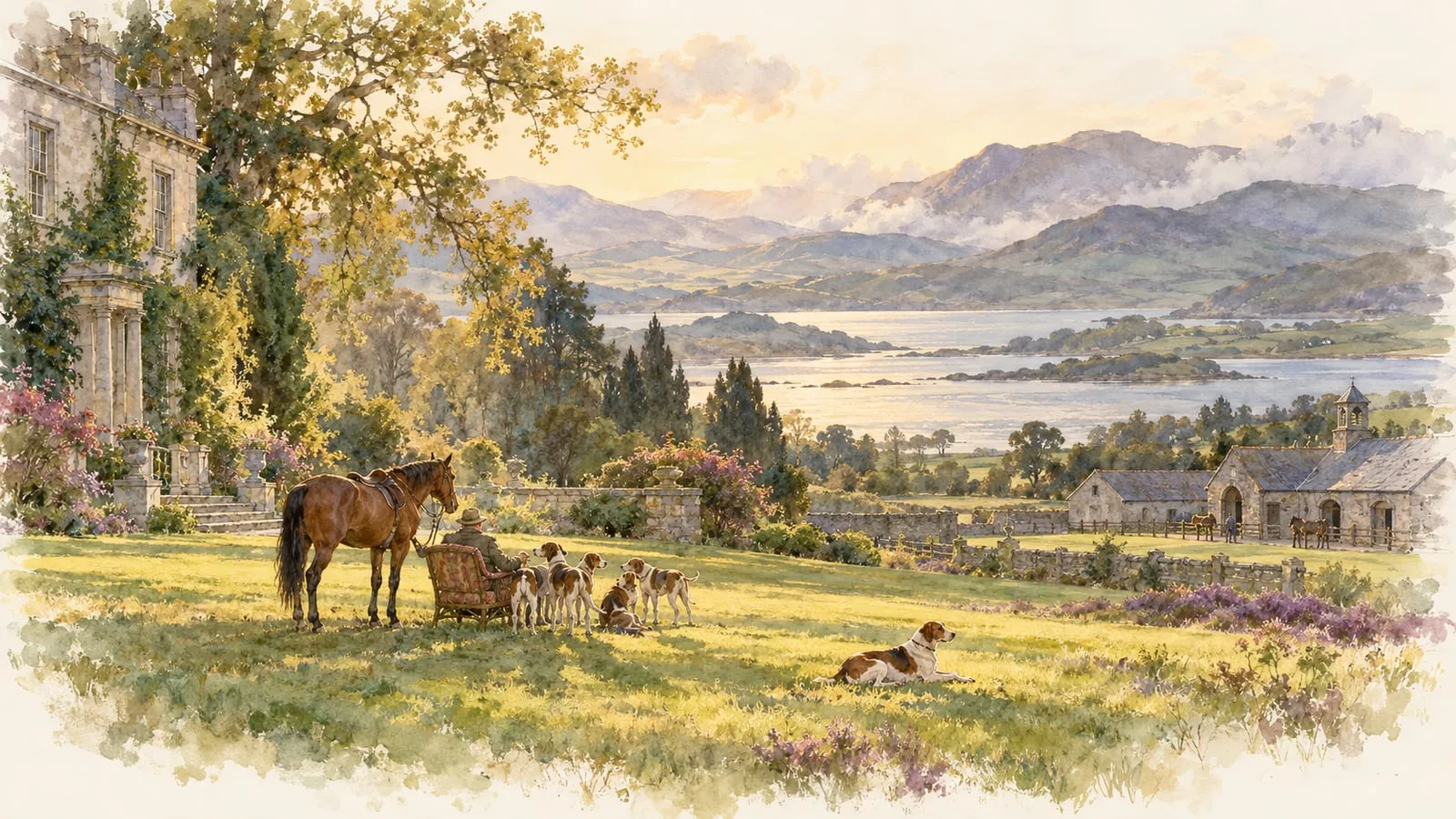
In "penal days" Father John rides out to a "shoneen", a grasping upstart with his own "snipe and trout". The shoneen takes John's lands "In trust" and gives them away as dowries, so his daughters marry "beyond their place". The betrayal is told in plain, quick ballad lines, without comment.
Lines 9 to 16Poor and loved
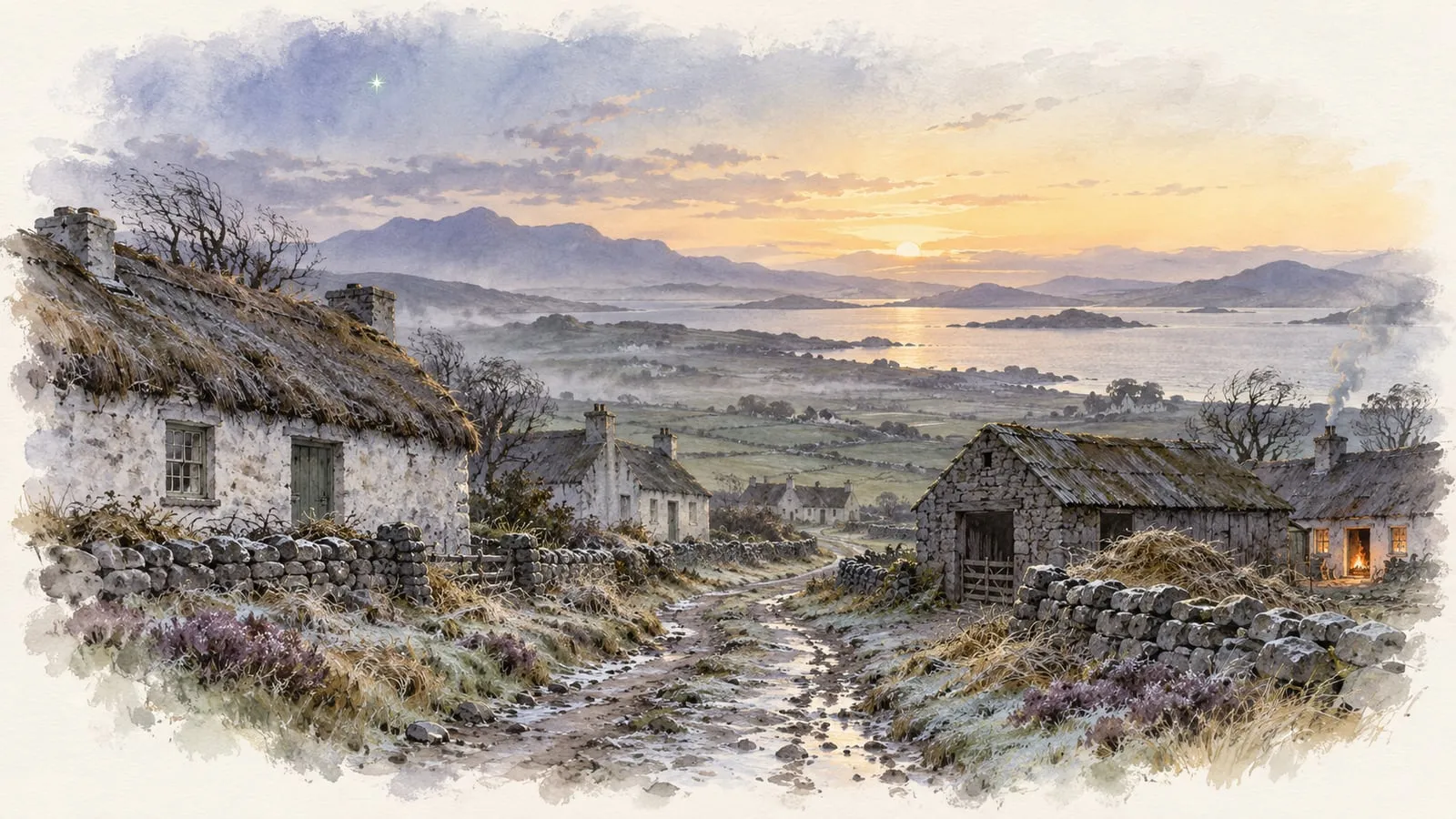
The priest goes "up" and "down" the countryside in worn-out clothes: "small holes in his shoes" and "large holes in his gown", the neat parallel making his poverty almost comic. Everyone loves him, from wives, cats and children to "the birds in the white of the air", except the shoneen, whom "the devils have by the hair".
Lines 17 to 24Freeing birds, stopping keens
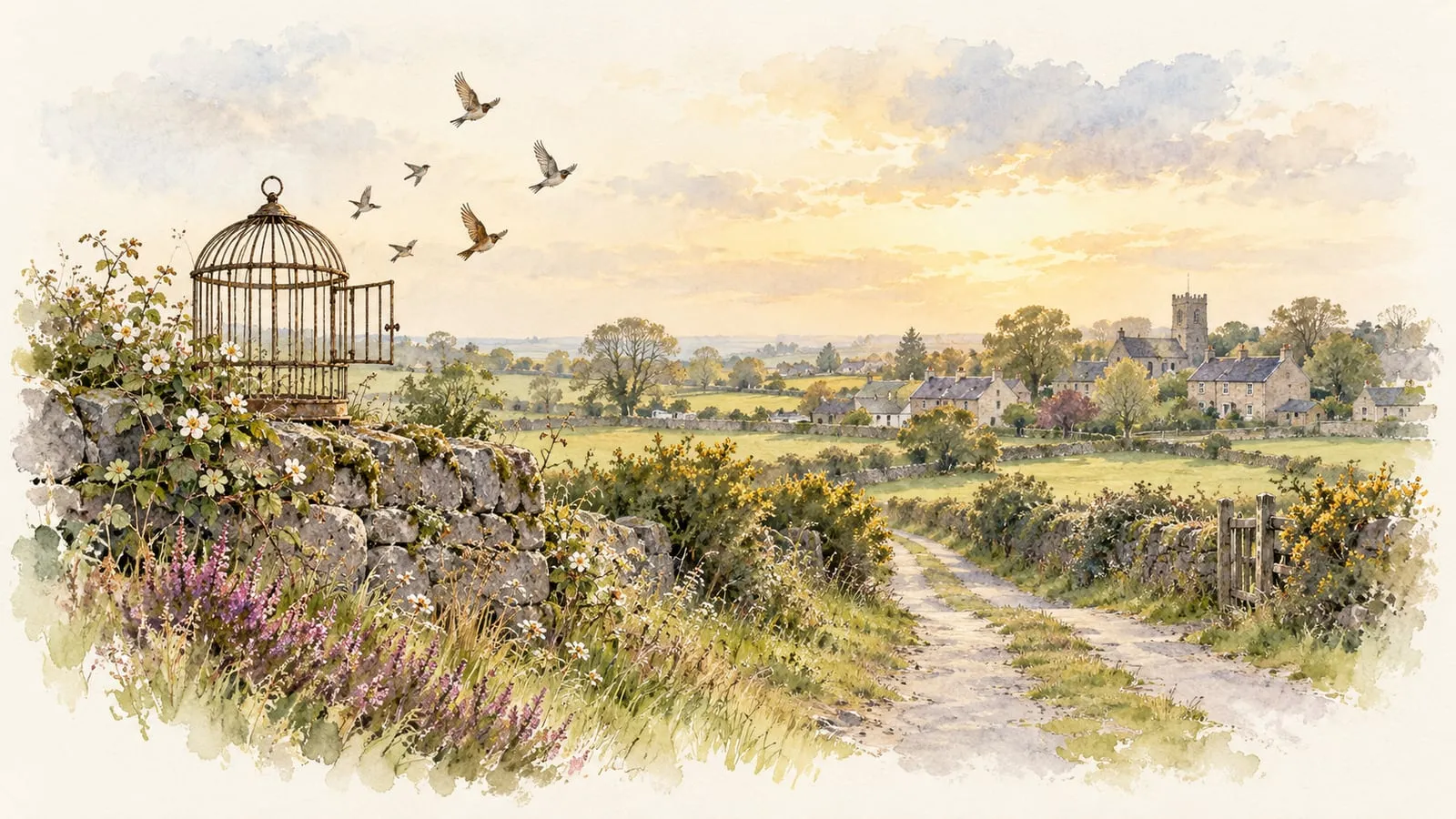
The birds love him because he opens their cages, saying "Have peace now" with a smile. Yet he frowns on the loud funeral wailing of "keeners hoarser than rooks" and makes them stop, "For he was a man of books". Gentle with creatures, he is stern about an old country custom.
Lines 25 to 32Death at ninety-four
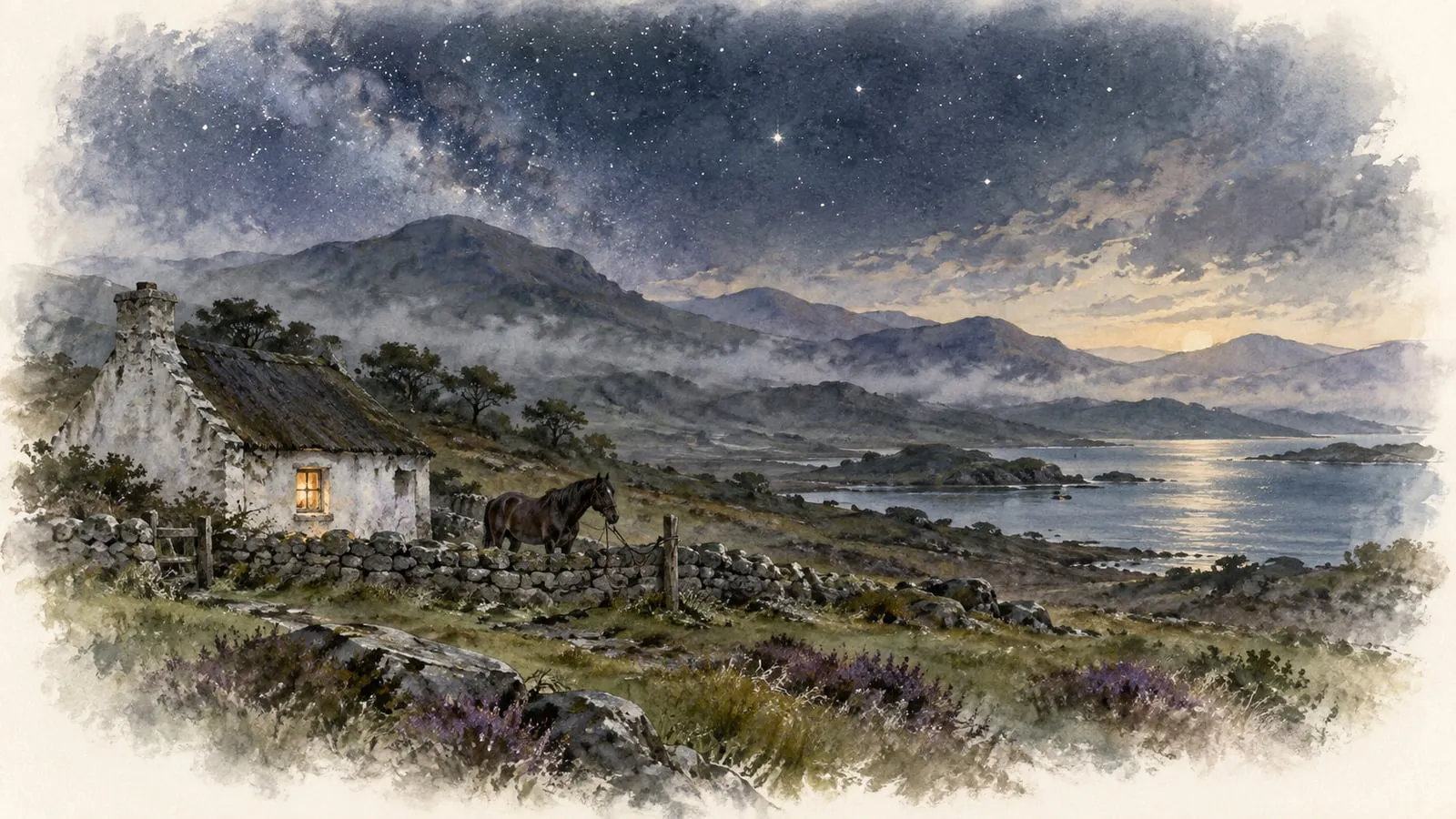
People come "score by score" into Coloony when he dies at ninety-four. But in a neat reversal there is "no human keening": the mourners he silenced stay quiet, and the birds from Knocknarea and around Knocknashee come to keen in their place.
Lines 33 to 40The birds' lament
Young and old birds fly in "heavy and sad" from Tiraragh, Ballinafad and Inishmurray, too grieved to stop "for bite or sup". The roll-call of Sligo names spreads the mourning across the county. The last two lines deliver the joke: all who "dig old customs up" are reproved this way.
Themes
Goodness and greed
The ballad sets two men side by side. The shoneen takes land held "In trust" and uses it to raise his family's status; the priest loses everything and wears "large holes in his gown". The poem's sympathy is plain: everyone loves Father John, while the shoneen is left in the devils' grip, held "by the hair".
Old customs
Keening, the loud wailing lament over the dead, is an old Irish custom, and the bookish priest tries to stop it. The poem gently mocks him for it: at his own death the birds keen for him from all over Sligo. The closing moral, that those who "dig old customs up" are reproved, treats tradition as something stronger than any one reformer.
Nature's mourning
The priest freed the caged birds, and the birds repay him. The list of places in lines 30 to 37 (Knocknarea, Knocknashee, Tiraragh, Ballinafad, Inishmurray) turns a village funeral into a lament carried by the whole landscape, as in the old heroic tales where nature grieves for a great man.
Context
The ballad first appeared as "The Priest of Coloony" in Fairy and Folk Tales of the Irish Peasantry (1888), the anthology Yeats edited, with a note that Father O'Hart lived at Coloony in the eighteenth century and that the lines record the local tradition. Retitled "Father O'Hart", it was collected in The Countess Kathleen and Various Legends and Lyrics (1892), and Yeats later grouped it with his early lyrics under the heading "Crossways" in Poems (1895).
It belongs to Yeats's early project of setting down Sligo folklore in simple verse. The "penal days" are the period of the penal laws, when Catholics in Ireland were barred from buying land, which is why a priest would need someone else to hold his property "In trust". Every place named in the poem is in County Sligo, the country of Yeats's childhood.
Form
Ten quatrains in loose ballad metre, with three or four beats to the line and rhymes on the second and fourth lines ("out" and "trout", "down" and "gown"). The repeated "Keening" that opens lines 35 to 37 builds the lament like a chant, and the flat, proverb-like last couplet gives the story its punchline.
Yeats's own note
This ballad is founded on the story of a certain Father O’Hart, priest of Coloony, Sligo, in the eighteenth century, as told by the man who was priest of Coloony in his History of Ballisodare and Kilvarnet. The robbery of the lands of Father O’Hart was a kind of robbery which occurred but rarely during the penal laws. Catholics, forbidden to own landed property, evaded the law by giving a Protestant nominal possession of their estates. There are instances on record in which poor men were nominal owners of immense estates.