The estate
Coole House was built in the late eighteenth century for the Gregory family. In 1880 Augusta Persse, from Roxborough in the same county, married Sir William Gregory of Coole. He died in 1892, and as Lady Gregory she ran the estate for their only son, Robert, while becoming a folklorist, translator and playwright.
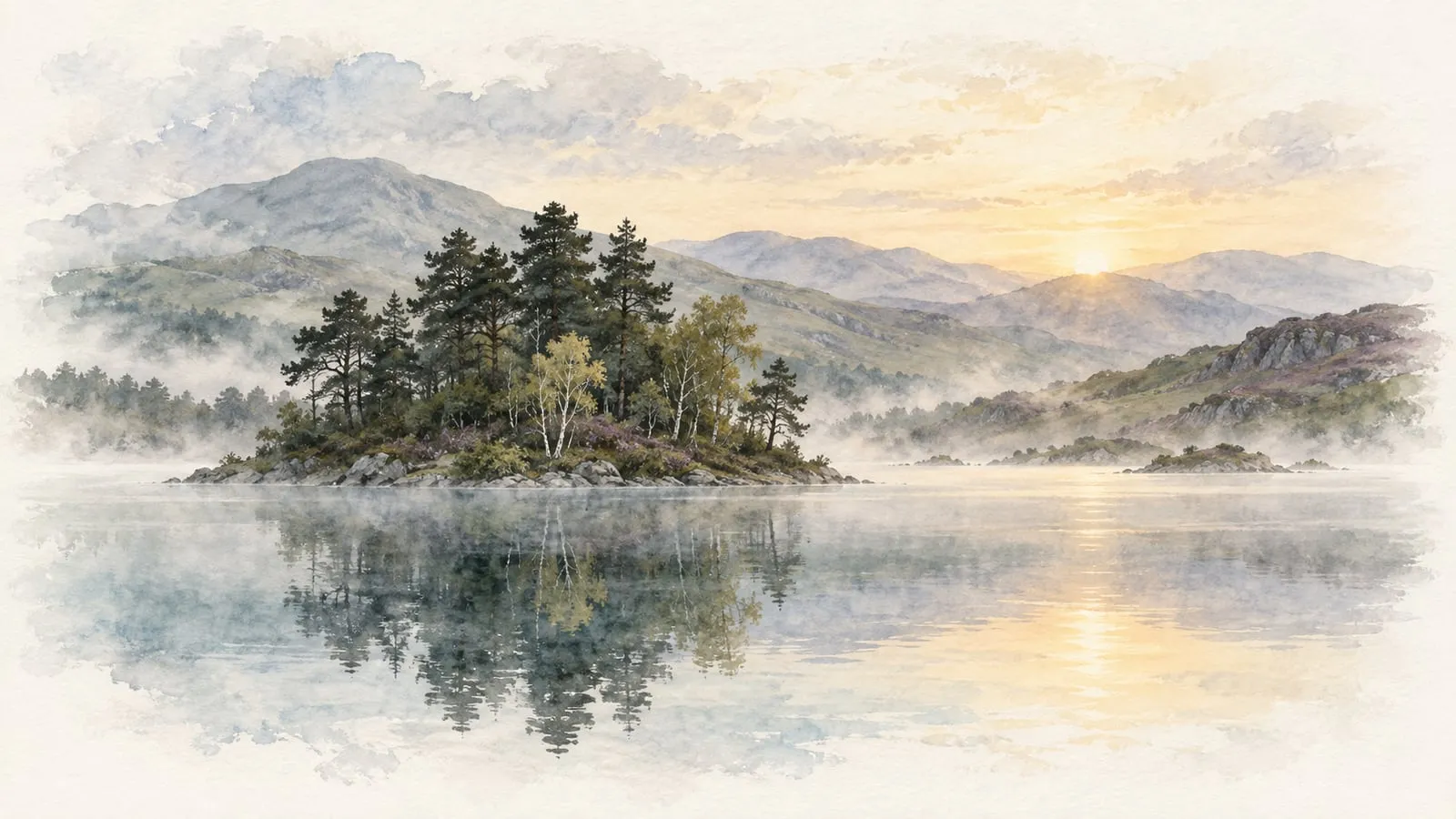
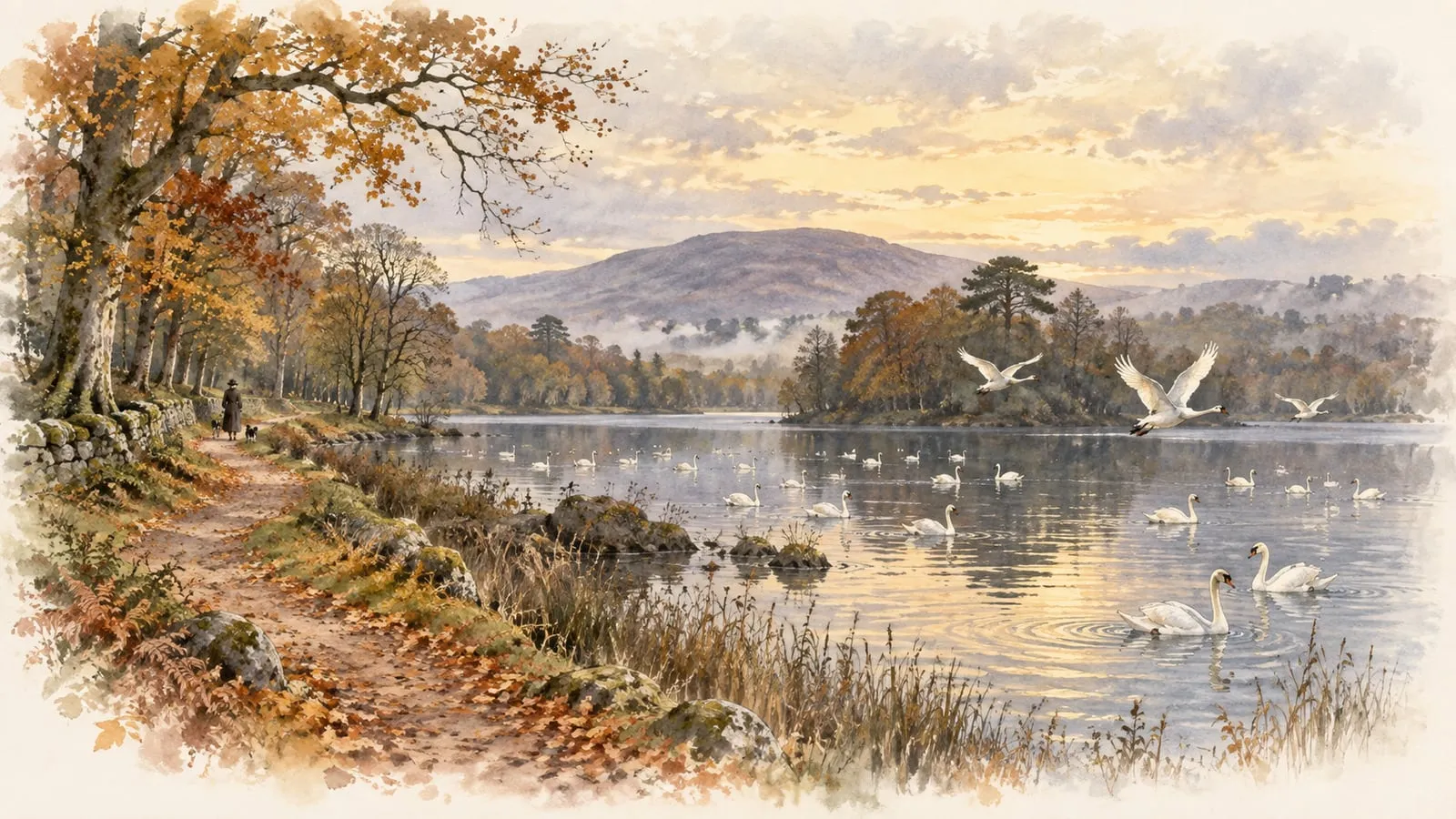
The land is low-lying limestone country where water comes and goes underground. Coole Lough is part of a system of lakes, turloughs (seasonal lakes that fill and drain through the rock), underground rivers and swallow holes, with woods around it.
Yeats at Coole
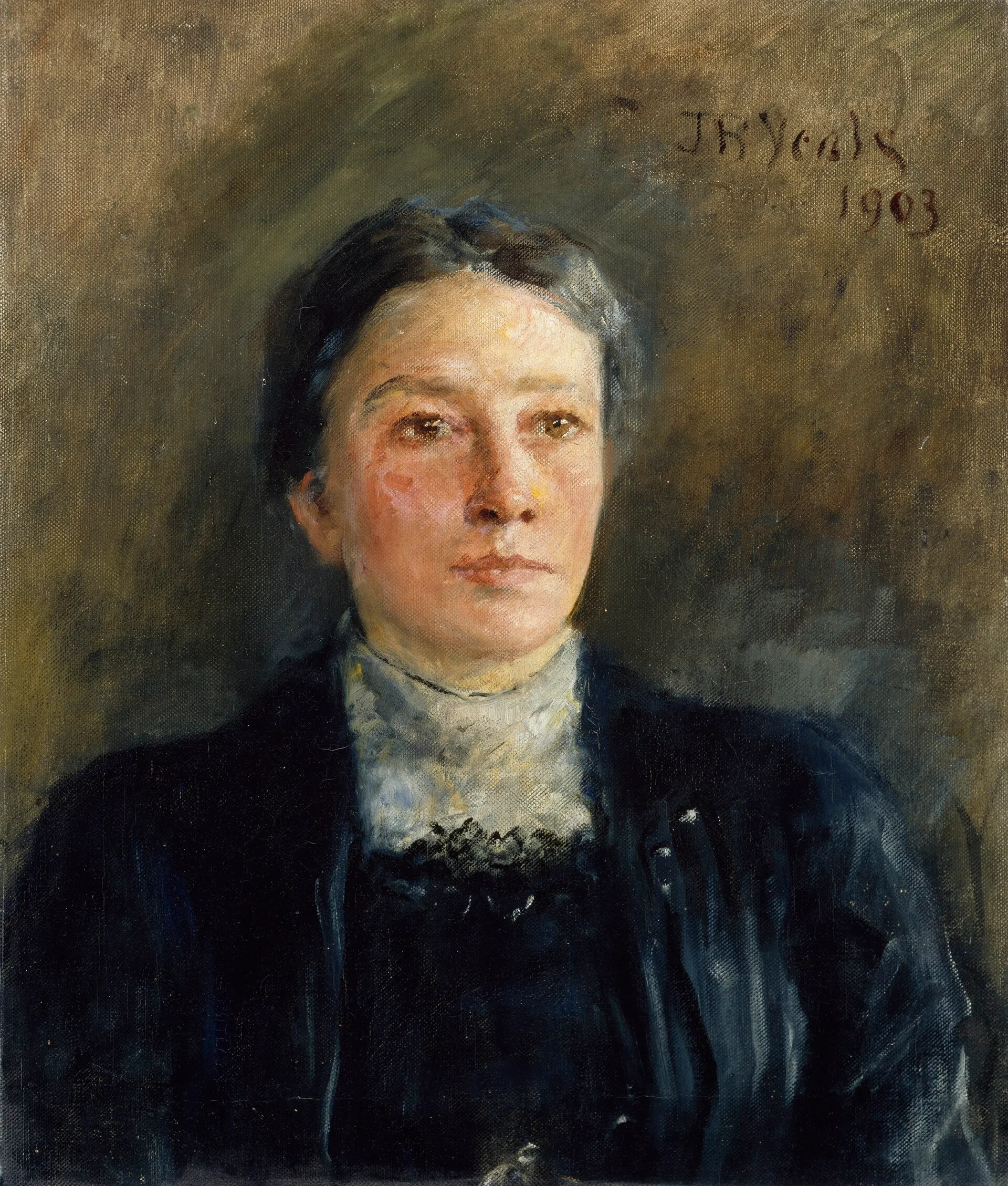
Yeats met Lady Gregory in 1896, while staying with Edward Martyn at nearby Tulira. He spent the summer of 1897 at Coole, when she took him from cottage to cottage collecting folklore, and for years afterwards he returned most summers. Coole gave him a settled place to write, and much of the work of the Irish literary revival was done there. She and Yeats were founders, with others, of the Irish Literary Theatre in 1899 and the Abbey Theatre, which opened in 1904.
Guests carved their initials on a copper beech in the walled garden, now known as the Autograph Tree: among them Yeats and his brother Jack, J. M. Synge, George Bernard Shaw and Seán O'Casey. Lady Gregory's son Robert, a painter and pilot, was killed on active service over Italy on 23 January 1918. In 1927 the house and lands were sold to the state, and Lady Gregory stayed on as a tenant until her death in May 1932. The empty house was demolished in 1941.
In the poems
"The Wild Swans at Coole", written in the autumn of 1916, counts "nine and fifty swans" on the lake in the nineteenth autumn since he first made his count there, and sets their unwearied lives against his own sense of age. "In the Seven Woods", dated August 1902, finds peace among the estate's Seven Woods and ends at "Parc-na-Lee", one of them, and the lines that introduce "The Shadowy Waters (Introductory Lines)" begin "I walked among the seven woods of Coole" and name the woods one by one.
"An Irish Airman foresees his Death" and "In Memory of Major Robert Gregory", both collected in 1919, are for Robert Gregory; the airman says "My country is Kiltartan Cross", the crossroads of the local parish. Two late poems, "Coole Park, 1929" and "Coole Park and Ballylee, 1931", look back on the house and on Lady Gregory as her life drew to its close. They are still in copyright in the United States, so this site gives notes on them rather than their text.
Visiting today
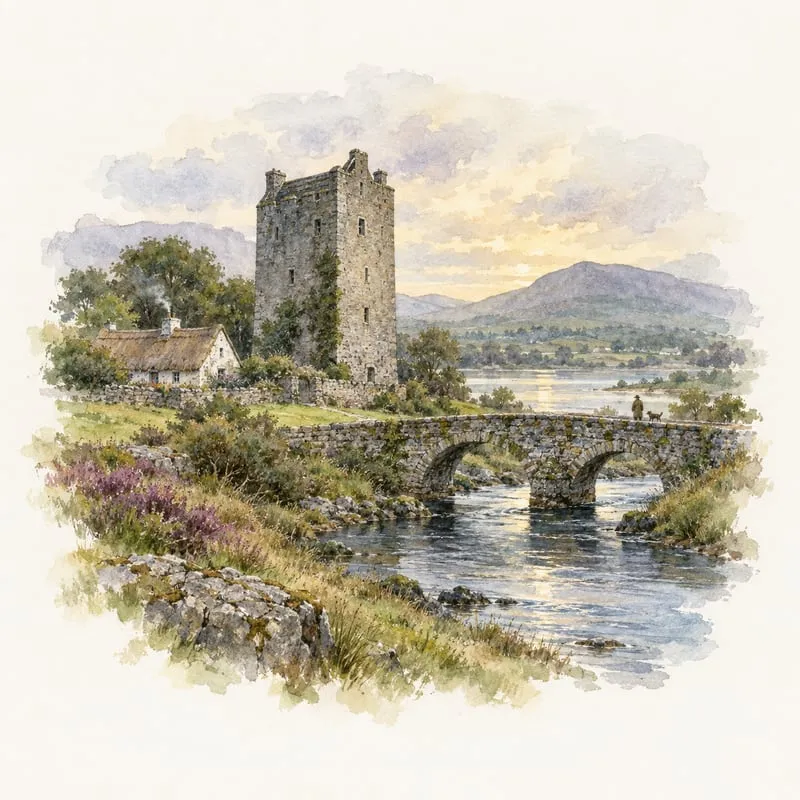
Coole Park is a nature reserve of about 400 hectares, managed by the National Parks and Wildlife Service and part of the Coole-Garryland Special Area of Conservation. Marked trails lead through the woods to the lake. The walled garden with the Autograph Tree can be visited, and the site of the house, where only foundations remain, can still be found. A visitor centre and café in the former farm buildings opens in the main season. Thoor Ballylee, Yeats's tower, is a few kilometres away.