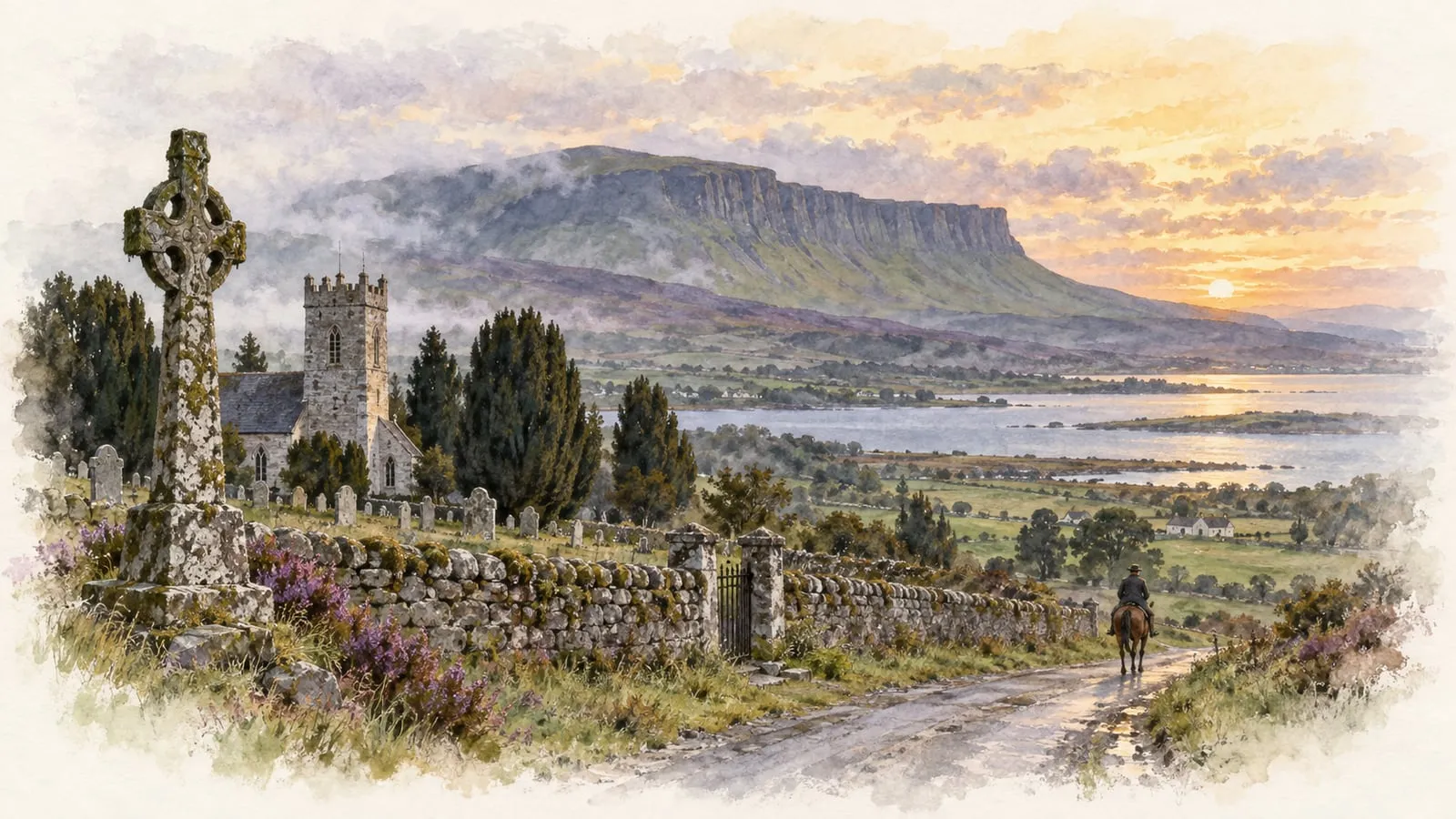
The place
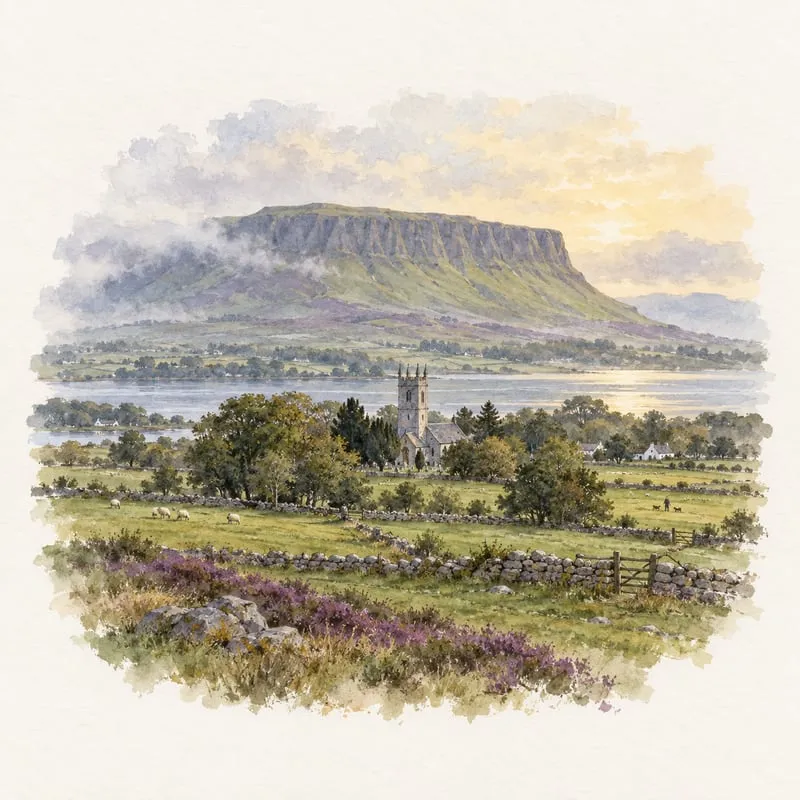
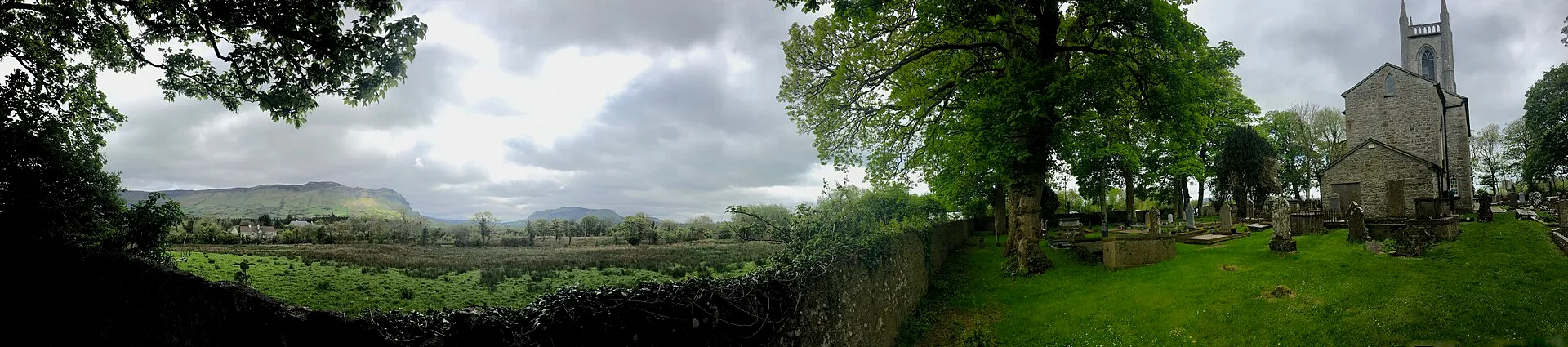
Drumcliffe, in Irish Droim Chliabh, the ridge of the baskets, and often spelt Drumcliff, is a village about 8 km north of Sligo town on the N15. It sits on the Drumcliff River, which drains Glencar Lake, between Ben Bulben and Drumcliff Bay.
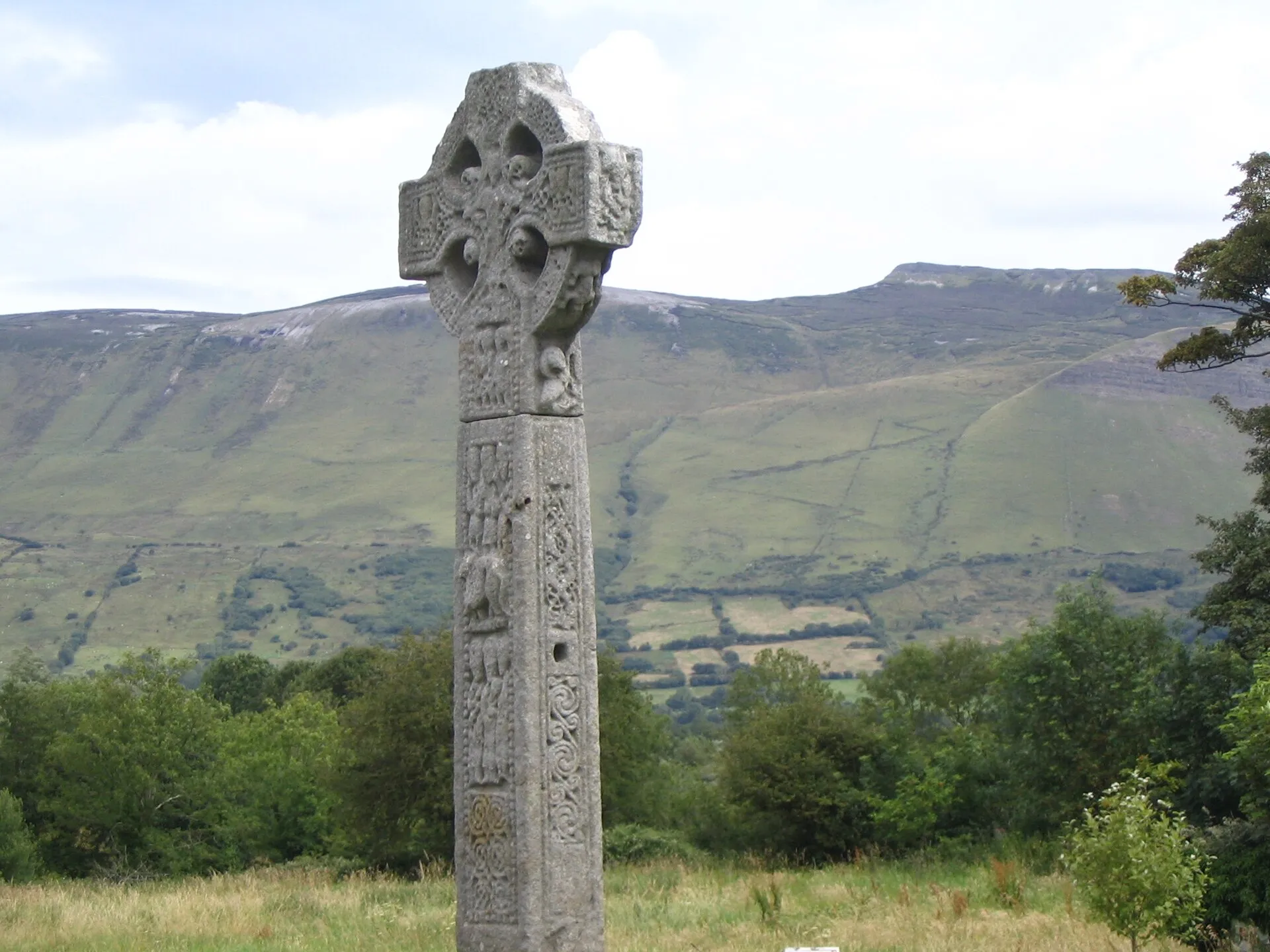
St Columba, or Colmcille, founded a monastery here around 575, and the place was important enough to give its name to the surrounding district. Two things survive from it: a carved high cross of about 1100, which stands in the churchyard, and the stump of a round tower of the tenth or eleventh century, the only round tower in County Sligo, said to have been struck by lightning in 1396. The present church, St Columba's, is a Church of Ireland parish church built in 1809.
Yeats's family and his choice
The poet's great-grandfather, the Reverend John Yeats, was rector of Drumcliffe in the early nineteenth century and stayed until his death in 1846. When Yeats wrote "Under Ben Bulben" in 1938, he asked to be buried here, below the mountain, in the churchyard where an ancestor had been rector, under a plain stone of local limestone with no marble and no conventional words.
From Roquebrune to Drumcliffe
Yeats died in the south of France on 28 January 1939 and was buried at Roquebrune-Cap-Martin. The Second World War stopped any move for years. In September 1948 the Irish naval corvette Macha brought his coffin to Galway, and from there it was driven in procession to Sligo. On 17 September 1948 he was reburied at Drumcliffe with a state funeral, in soft rain, with his brother Jack among the mourners. The move was arranged for the government by Seán MacBride, then Minister for External Affairs and the son of Maud Gonne. His wife George, who died in 1968, is buried with him.
Doubts about the remains were raised even then, because the grave at Roquebrune had been cleared into an ossuary in 1946. French diplomatic papers made public in 2015 suggest that the bones sent to Ireland were chosen from mixed remains and may not be his. For most visitors the grave matters as the place Yeats chose.
The headstone
The grave lies close to the church door. The headstone carries his name and dates and the three-line epitaph that closes "Under Ben Bulben", addressed to a horseman riding past on the road. That poem is still in copyright in the United States, so this site gives notes on it rather than its text; the epitaph can be read on the stone itself, in the photograph on this page.
Visiting today
The churchyard is beside the N15 in Drumcliff village, and visitors are welcome to walk in it. St Columba's is a working parish church, so services come first. There is a café and craft shop at the church. Ben Bulben rises behind, and the Gortarowey forest walks at its foot are a short drive away.